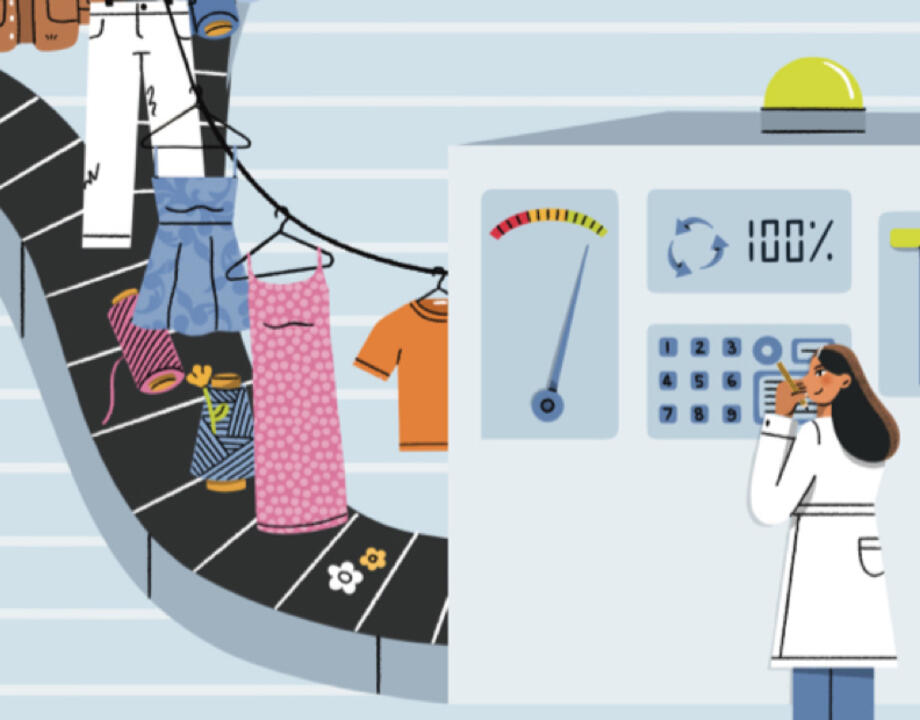
OUR SUPPLY CHAIN
OVS supply chain spans 16 countries and more than 600 suppliers, involving more than 90,000 people employed in the production of garments. OVS operates as a vertically integrated retailers where it doesn't controls any facilities of products at any levels of production (Tier 1, 2, 3, 4). From HQ and the subsidiary companies abroad it controls product development and manufacturing operations.
Where are suppliers located? Discover here.
More than half of the workers in the textile industry are women, but male hold the majority of supervisory and managerial roles (respectively 73% and 82%).
CONTROL PROCEDURES AND SYSTEMS
OVS has implemented standards, procedures, and control systems.
Responsible Purchasing Practice Policy
The Responsible Purchasing Practice Policy outlines OVS’s transparent commitments guiding its purchasing practices, thereby fostering improved work organization, delivery schedules, and cost management. Suppliers are also required to define their own purchasing practices regarding their sub-suppliers.
Code of Conduct
This establishes standards for protecting workers' rights within factories and ensuring respect for the environment and the communities in which the factories operate. Suppliers are required to sign and implement the Code of Conduct.
MAKING PROGRESS TOGETHER
In 2025, "Making Progress Together" was launched—a co-evolution program with strategic suppliers designed to guide them through the energy transition and enhance worker empowerment. The program engaged 89 suppliers, representing 67% of production volume.
The program includes:
- Training sessions: OVS conducts training sessions for suppliers responsible for the supply chain's largest production volumes, featuring input from industry experts.
- Support: One-on-one meetings to assess the organization's level of awareness regarding decarbonization and to define an implementation plan for actions to reduce Scope 1 and 2 emissions.
Additionally, OVS launched a capacity-building pilot program for management and worker representatives focused on the effective operation of worker committees (Worker Participation Committees – WPCs). This significant stakeholder engagement takes place through separate factory-based training sessions aimed at improving the soft skills required to lead a committee responsibly.
OVS has set two goals for 2026:
- 80% of production volume to be covered by suppliers with an internal worker representation system.
- 80% of production volume to be covered by suppliers that have declared a plan to reduce Scope 1, 2, and 3 emissions compared to the baseline year.
Results achieved in 2025:
- 45% of production volume covered by suppliers that have declared a plan to reduce Scope 1, 2, and 3 emissions compared to the baseline year.
- 79% of production volume covered by suppliers with an internal worker representation system.
OUR NETWORK

Cascale
OVS is a Progressive + member of Cascale, the multi-stakeholder platform that developed Wordly, the suite of solutions to collect data of supply chain.
Accord on fire and building safety
OVS is a signatory to the "Accord on Fire and Building Safety" programme, that aims to improve working conditions in Bangladesh through the verification and safety of production buildings in the textile chain, including through financial support.
SPOTLIGHT
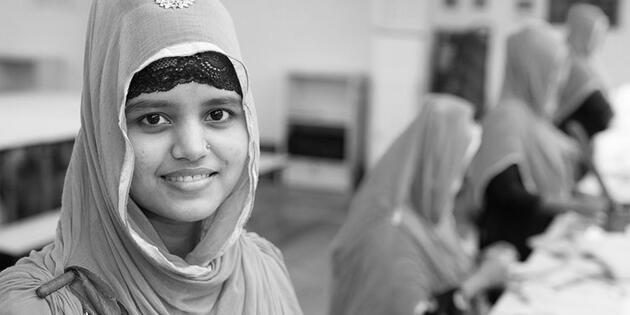
Towards a living wage in Bangladesh
Discover more
Forced labor in Xinjiang
Discover more
Clear Vision Workplace Program
Discover moreOUR CONTRIBUTION TO THE SUSTAINABLE DEVELOPMENT GOALS (SDG)
Clean water and sanitation
To combat the growing scarcity of drinking water caused by the climate crisis, we promote water conservation practices in our manufacturing processes and adopt strict guidelines for wastewater management from our suppliers.
Decent work and economic growth
To contribute to fair and sustainable economic development in the places where our supply chain operates, we are committed to promoting decent working conditions, ensuring that workers receive adequate pay, and providing equal opportunity.
Responsible consumption and production
In order to reduce the use of natural resources in the entire production cycle and to improve the quality of life of all the people involved, we promote circularity with concrete actions aimed at using production waste and with production processes that reduce environmental impact.
EXPLORE THE OTHER SECTIONS